Pharmaceutical Quality Control: How SAP Business One Improves Quality Management and Compliance
For the pharmaceutical industry, maintaining pharmaceutical quality control is critical. With the advent of technology, many pharmaceutical companies are now implementing advanced pharmaceutical quality management software to manage their quality control processes efficiently. SAP Business One is an end-to-end ERP solution that integrates core business functions, with quality management as one of its key built-in capabilities.
Conventional quality control practices involve manual documentation and non-integrated systems. SAP Business One assists pharmaceutical companies in automating and integrating quality control processes, enabling them to monitor the quality of products throughout the entire production cycle.
Using an integrated system, manufacturers can track raw materials, monitor quality control, and comply with industry regulations.
As a modern pharma quality management software, SAP Business One makes it possible for quality checks to be carried out during various stages of production.
Key capabilities include:
This ensures that faulty products are not moved any further in the supply chain.
Pharmaceutical companies must keep records of every batch produced. SAP Business One helps in complete batch and lot tracing, which can prove to be advantageous in tracing materials, production, and distribution information.
Such traceability helps in adhering to strict pharmaceutical regulations and helps companies to act quickly in case of issues or recalls.
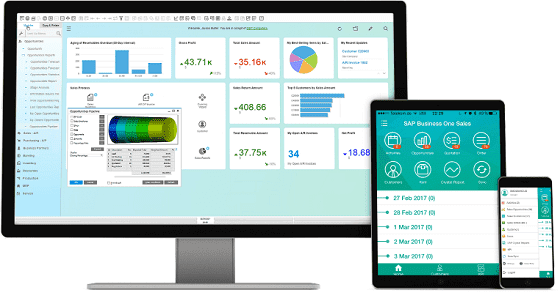
Effective quality control in the pharmaceutical industry demands accurate information and transparency. With real-time dashboards and reporting tools, SAP Business One helps provide insights into quality metrics, production performance, and compliance status.
This enables management to identify trends, mitigate potential risks, and improve overall quality standards.
Implementation of appropriate pharma quality management software is essential for maintaining regulatory compliance and product safety. With its ability to offer traceability, quality checks, and documentation, SAP Business One can help pharmaceutical manufacturers improve their quality management processes with increased efficiency.
eNoah helps pharmaceutical companies in the implementation and customization of SAP ERP systems that meet the quality and regulatory requirements of the pharmaceutical industry. Pharmaceutical companies can benefit from the SAP Business One expertise of eNoah to develop robust quality management systems.